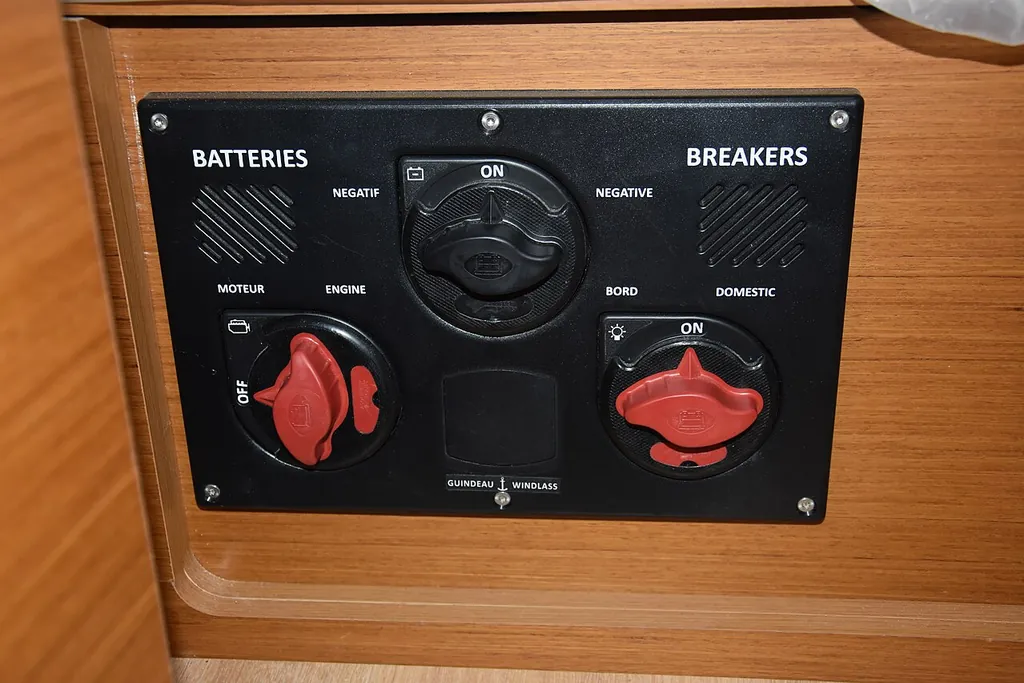
The parts between the battery and the load
New batteries cannot fix bad connections. Most of the battery bank problems we find that are not the batteries are in the parts that connect them.
Cables and lugs
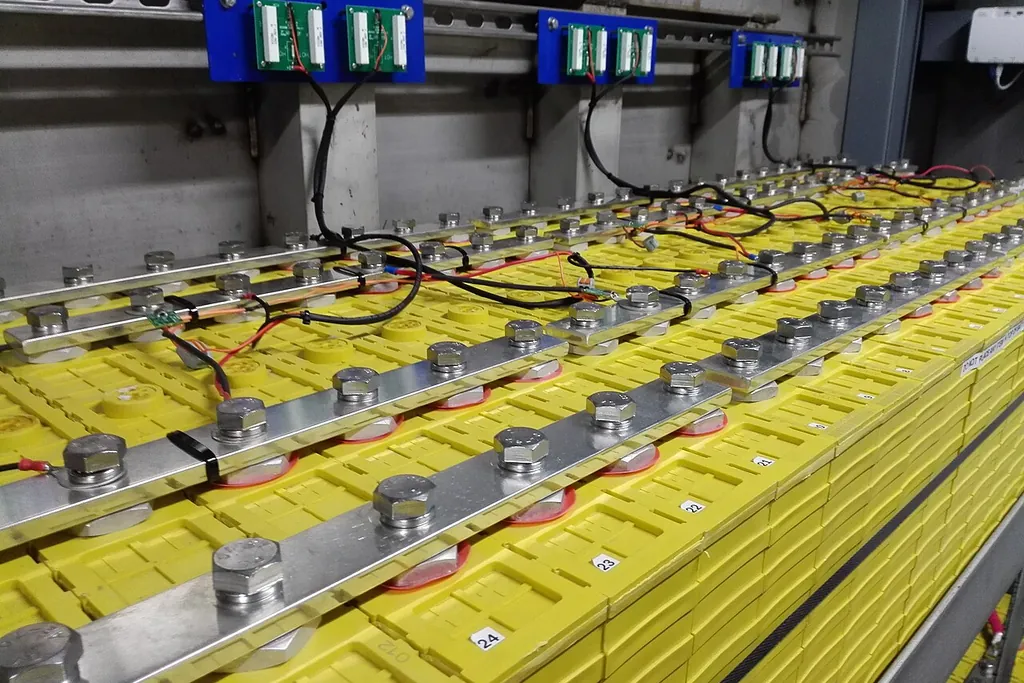
Cable has to be sized for the current and the length of the run. Too small and it heats up and drops voltage. The trolling motor feels weak, the inverter shuts off, the cart slows on hills. Lugs have to be crimped properly and sealed with heat-shrink, especially on a boat. We replace corroded, cracked or undersized cables and jumpers with tinned marine cable on boats.
Fuses and breakers
A battery can deliver enough current to start a fire in a short circuit. A fuse or breaker close to the positive terminal protects the cable from the battery to the load. On many older boats and RVs, there is none. We add a properly rated fuse or breaker sized to the cable and the load.
Battery switches
A battery switch lets you pick which battery runs the boat, or shut everything off. Common setups:
- Off / 1 / 2 / Both switches that let you start from either battery and combine them in an emergency.
- Dual-circuit setups that keep the starting battery on its own circuit and the house bank on another.
- Automatic charging relays that connect the batteries for charging when the engine runs and separate them when it stops.
We install and wire the switch so that draining the house bank cannot leave you without a way to start the motor.
Battery disconnects
RVs and stored boats benefit from a disconnect that stops parasitic draws. It is one of the cheapest ways to make batteries last longer in storage.
Questions we get about this
Why does my battery cable get hot?
It is undersized for the current or has a bad connection. Either way, it should be fixed. It is a fire risk.
Do I need a fuse on my trolling motor?
Yes. Trolling motor makers specify a breaker or fuse size. Use it.