Three jobs, three designs
- Starting batteries have many thin plates. They give a big burst of current for a few seconds to crank an engine, then the alternator refills them. Drain one deeply and it wears out fast.
- Deep-cycle batteries have thicker plates. They give steady current for hours and handle being drained and recharged.
- Dual-purpose batteries sit in between. They can start an engine and handle moderate cycling. On a small boat with one battery, that is often the right choice.
Separate the engine battery
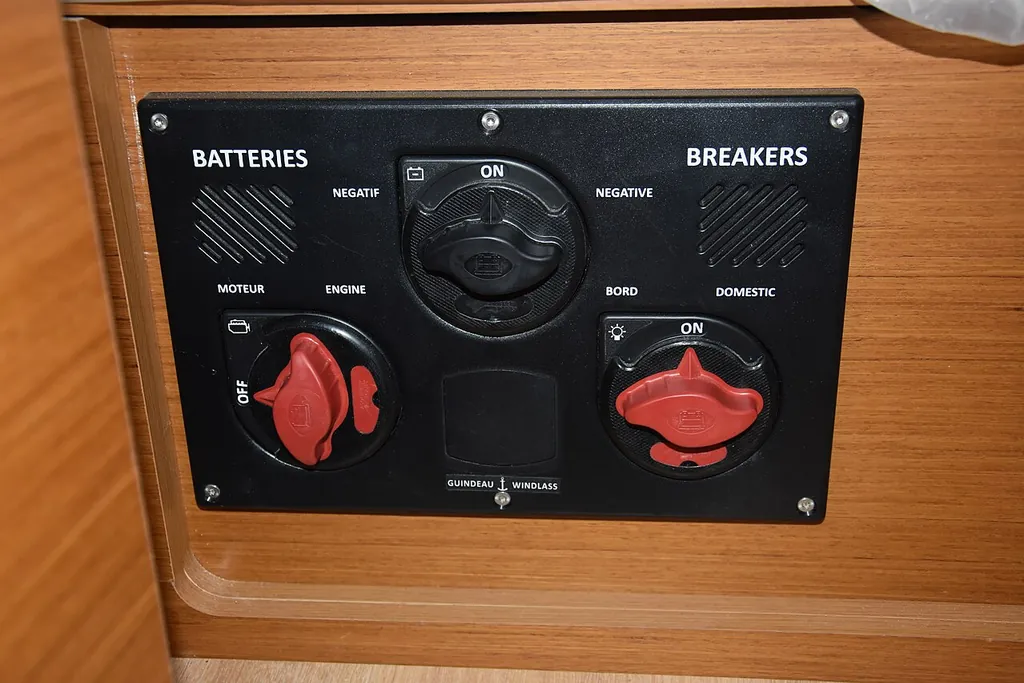
On a boat with electronics, a livewell, lights or a stereo, we like to see the engine on its own starting battery and everything else on a house bank. Then you can drain the house bank at anchor and still start the motor. A battery switch or an automatic charging relay ties them together for charging and keeps them apart when the engine is off. See cables, fuses and switches.
Cranking ratings
Starting batteries list CCA (cold cranking amps, measured at 0°F) and usually MCA (marine cranking amps, measured at 32°F). MCA is the higher number because a battery delivers more current when it is warmer. Your engine maker lists a minimum. Match or beat it. See marine cranking amps vs CCA.
Lithium for starting
Some lithium batteries are built to start engines and list a cranking rating. Many lithium deep-cycle batteries are not, and their BMS may shut off under a big cranking load. Some outboard makers also have rules about lithium on their charging systems. We check the battery's rating and the engine maker's guidance before putting lithium on an engine.
What we install
AGM and flooded starting and dual-purpose batteries for outboards, inboards and generators, and lithium starting batteries where the engine maker allows them. We check the charging voltage with the engine running before we leave.
Questions we get about this
Can I use a deep-cycle battery to start my outboard?
Often, if it meets the engine maker's cranking requirement. Many deep-cycle and dual-purpose batteries do. Check the MCA or CCA against the manual.
Do I need two batteries?
If you run electronics, a trolling motor or anything with the engine off, a separate starting battery means you can always start the motor.