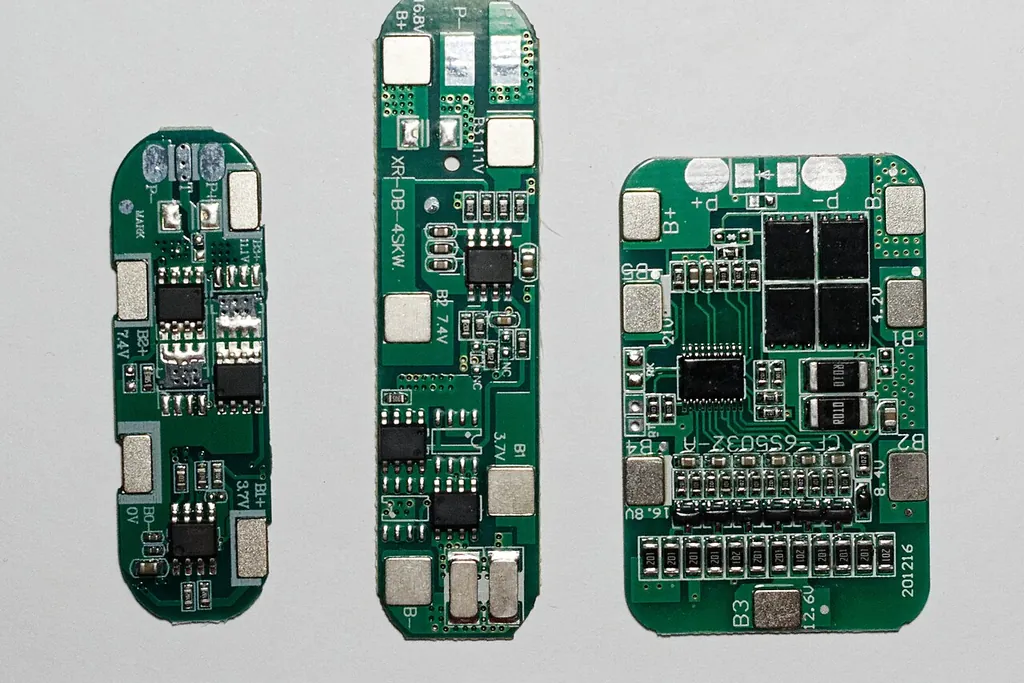
The brain inside the case
Every lithium iron phosphate battery worth buying has a battery management system, or BMS. It is a circuit board between the cells and the terminals. It watches the battery and switches it off if something goes outside safe limits.
What it protects against
- Overcharge. If any cell goes too high in voltage, the BMS stops charging.
- Over-discharge. If any cell goes too low, the BMS stops the battery delivering power, before the cells are damaged.
- Overcurrent. If the load draws more than the battery is rated for, the BMS cuts it off. This is why a lithium battery's continuous current rating matters for trolling motors, carts and inverters.
- Short circuit. It cuts off almost instantly. You still need a fuse, because the fuse protects the cable.
- Temperature. It stops charging when the battery is too cold, and stops everything when it is too hot.
Balancing
A lithium battery is several cells in series. Over time they drift apart a little. The BMS balances them, usually near the top of charge, so no single cell gets overcharged while the others catch up. That is one reason lithium batteries should get a full charge from time to time.
When a lithium battery "dies" suddenly
If a lithium battery goes from working to nothing at all, the BMS has usually switched it off. Common causes:
- It ran flat and the BMS protected it from over-discharge.
- The load was too big for the battery's current rating.
- It got too hot, for example in a closed compartment in the sun.
Many will wake up when connected to a charger. Some need a charger with a wake or recovery function. Call before assuming it is ruined.
Why it matters when you buy
Two batteries with the same amp-hours can have very different BMS limits. A trolling motor, an inverter or a golf cart needs a battery whose continuous and peak current ratings are above what the load draws. We check those numbers against your system.
Related questions
Can a BMS fail?
Yes, rarely. If one cell or the BMS fails, the battery usually shuts off rather than doing anything dangerous.
Does a lead-acid battery have a BMS?
No. Lead-acid batteries rely on the charger to look after them.