
Why storage kills batteries
Florida's off-season for many owners is summer. Snowbirds head north. Boats sit on lifts and RVs sit in storage lots. That is the hottest time of year, and the worst time to leave a battery alone.
Three things drain a stored battery:
- Self-discharge. Every battery slowly loses charge. Lead-acid loses it faster in heat.
- Parasitic draws. Detectors, clocks, control boards, bilge pump float switches and the computers in some golf carts pull small amounts all the time.
- Heat speeding up both, plus aging the battery itself.
A lead-acid battery that sits partly charged sulfates. Once that is far enough along, the capacity does not come back.
Lead-acid: keep it charged
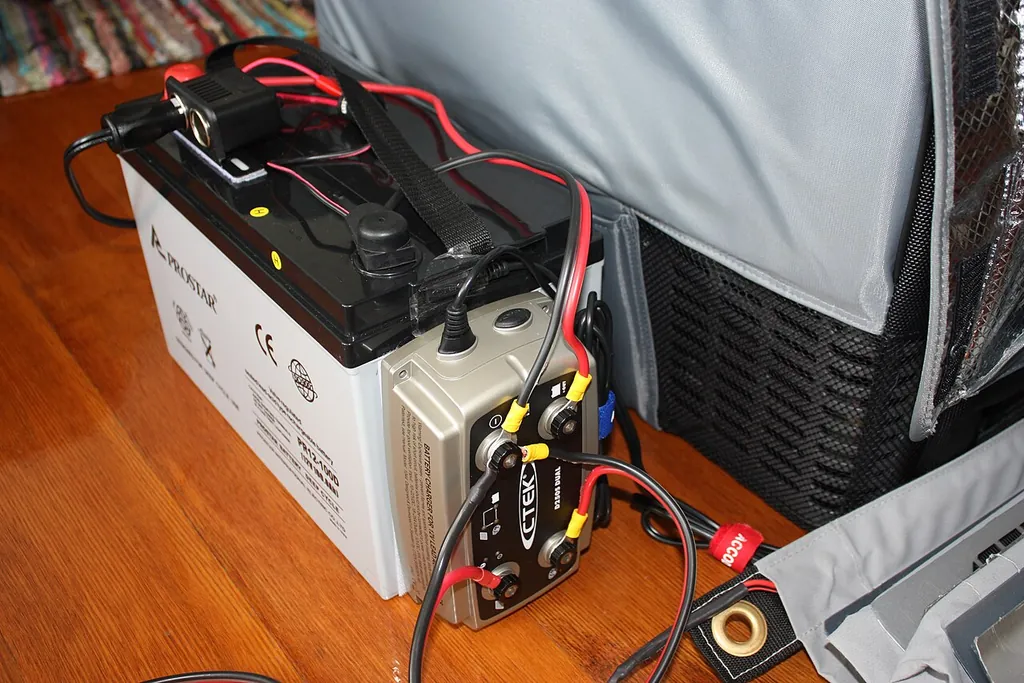
- Best: leave it on a quality smart charger or maintainer, set to the right chemistry, that holds it at float.
- Next best: fully charge it, disconnect it with the battery switch or disconnect, and recharge it every few weeks.
- Flooded batteries: top up water after a full charge before storing.
Lithium: store partly charged and disconnected
Lithium iron phosphate has very low self-discharge and does not sulfate. Most makers suggest storing it partly charged, often somewhere around half, with all loads disconnected. Follow the battery maker's guidance. Do not leave a parasitic load connected for months, or the BMS will shut the battery off when it gets low.
Boats on lifts
Bilge pumps need power. If the boat sits in the water or on a lift with a cover, a small solar maintainer or a shore charger keeps the bilge pump battery alive. Do not disconnect a bilge pump that needs to run.
Golf carts
Some carts have a tow/run switch or a storage mode that cuts the draw from the controller. Lead-acid carts should be left plugged in to a working charger, or charged every few weeks. Lithium carts should follow the battery maker's storage instructions.
When you come back
Check the charge, the water level in flooded batteries and the terminals before you use it. A lead-acid battery that reads very low after storage may already have lost much of its capacity. A test will tell you. See battery bank testing.
Related questions
Should I take the batteries out?
Usually not necessary. Disconnecting them and keeping them charged works.
Can I store lithium fully charged?
Check the maker. Many suggest partial charge for long storage.