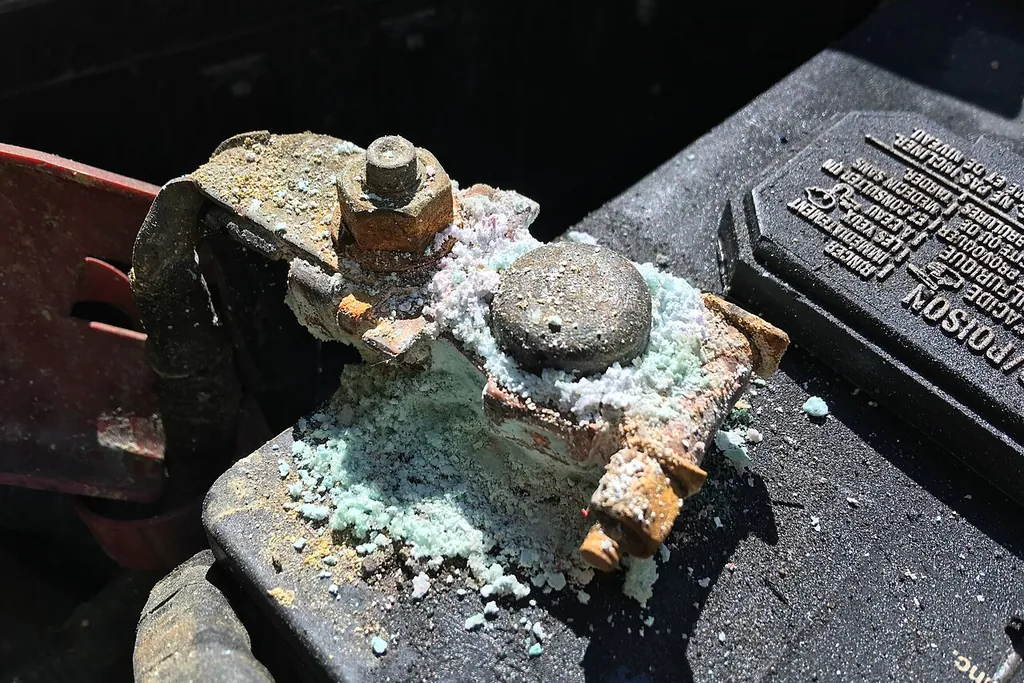
Why boats corrode
Salt in the air and spray conducts electricity and attacks copper and lead. Battery terminals, cable ends, switch studs and ground connections are all exposed. Corrosion adds resistance. Resistance means heat, voltage drop and lost power. A slow crank, a weak trolling motor or electronics that reset can all start at a corroded connection.
What it looks like
- White or blue-green crust on terminals and lugs.
- Green, black or powdery copper under cable insulation, sometimes far up the cable.
- Cable that feels stiff or swollen near the lug.
- A terminal that is warm after use.
Cleaning it safely
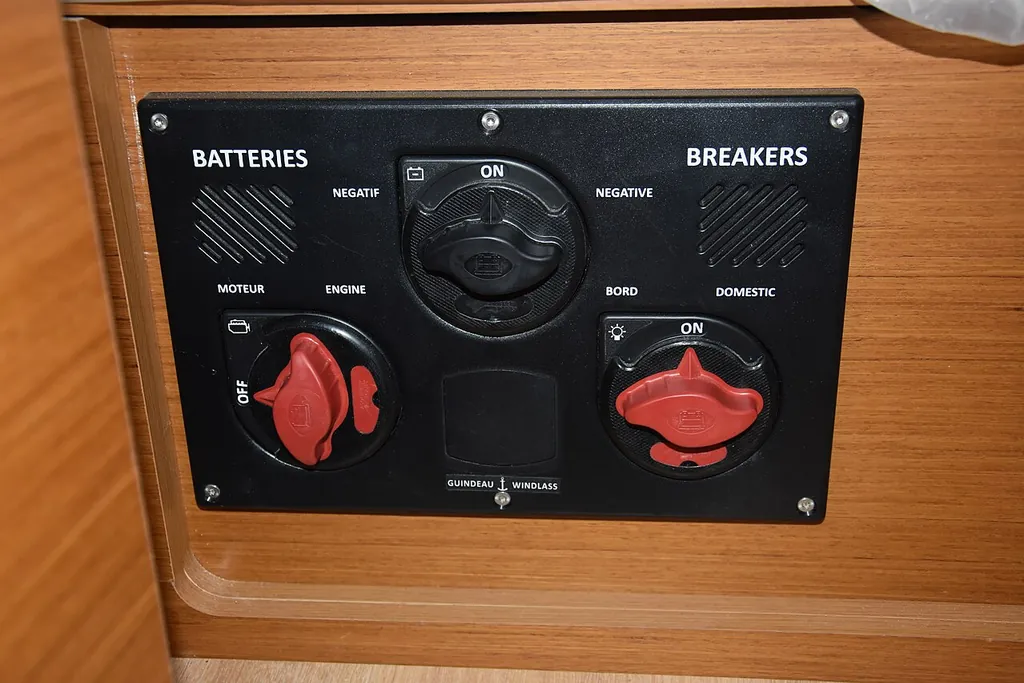
- Turn off the battery switch and disconnect the negative cable first.
- Wear eye protection and gloves. Battery acid and corrosion are caustic.
- Clean terminals and lugs with a brush and a baking soda and water mix, then rinse with fresh water and dry. Keep it out of the battery vent caps.
- Reconnect positive first, then negative. Tighten to the maker's torque.
- Coat with a terminal protector made for batteries.
If the corrosion has wicked up inside the cable, cleaning the end will not fix it. The cable needs replacing.
Preventing it
- Tinned marine cable. Each copper strand is coated in tin, which resists corrosion far better than bare copper.
- Properly crimped lugs with adhesive-lined heat-shrink, so water cannot get into the cable.
- Terminal boots or covers. These also prevent shorts if something metal falls across the battery.
- Battery boxes with lids, secured so the battery cannot move.
- A charger that keeps batteries charged. Corrosion and sulfation both get worse with neglect.
Lithium on boats
Lithium batteries do not vent acid mist, so they corrode their own terminals much less. The cables, lugs and switches still live in salt air and still need the same care.
What we do
We replace corroded cables and lugs with tinned cable, sealed crimps and heat-shrink, fit boots or boxes, and secure the batteries. See cables, fuses and switches.
Related questions
Can I use grease on terminals?
Use a protector made for battery terminals, applied after the connection is clean and tight.
How often should I check?
Every few months on a boat kept in salt water, and any time something electrical acts up.